Why you’re exhausted, what could be interfering with your cellular energy, and why understanding your biology may change everything.
By Flavia | Flavilicious Fitness
Have you ever wondered why so many people are finding it harder and harder to feel normal?
Why we wake up exhausted, reach for coffee before we can even think straight, struggle to concentrate, and somehow accept that this is just part of life?
We’re told it’s aging. Stress. Hormones. Having too much on our plates.
And yes, those things matter.
Yet after spending the last four years diving deeper into how our bodies work, I’ve become fascinated by something most people rarely think about.
Our mitochondria.
These tiny structures inside our cells are responsible for producing much of the energy we need to survive.
And the more you understand them, the more you’ll begin to question how we approach fatigue, aging, metabolism, and overall health.
Today, we’re going deep.
1. Meet Your Mitochondria: The Batteries Inside Your Cells
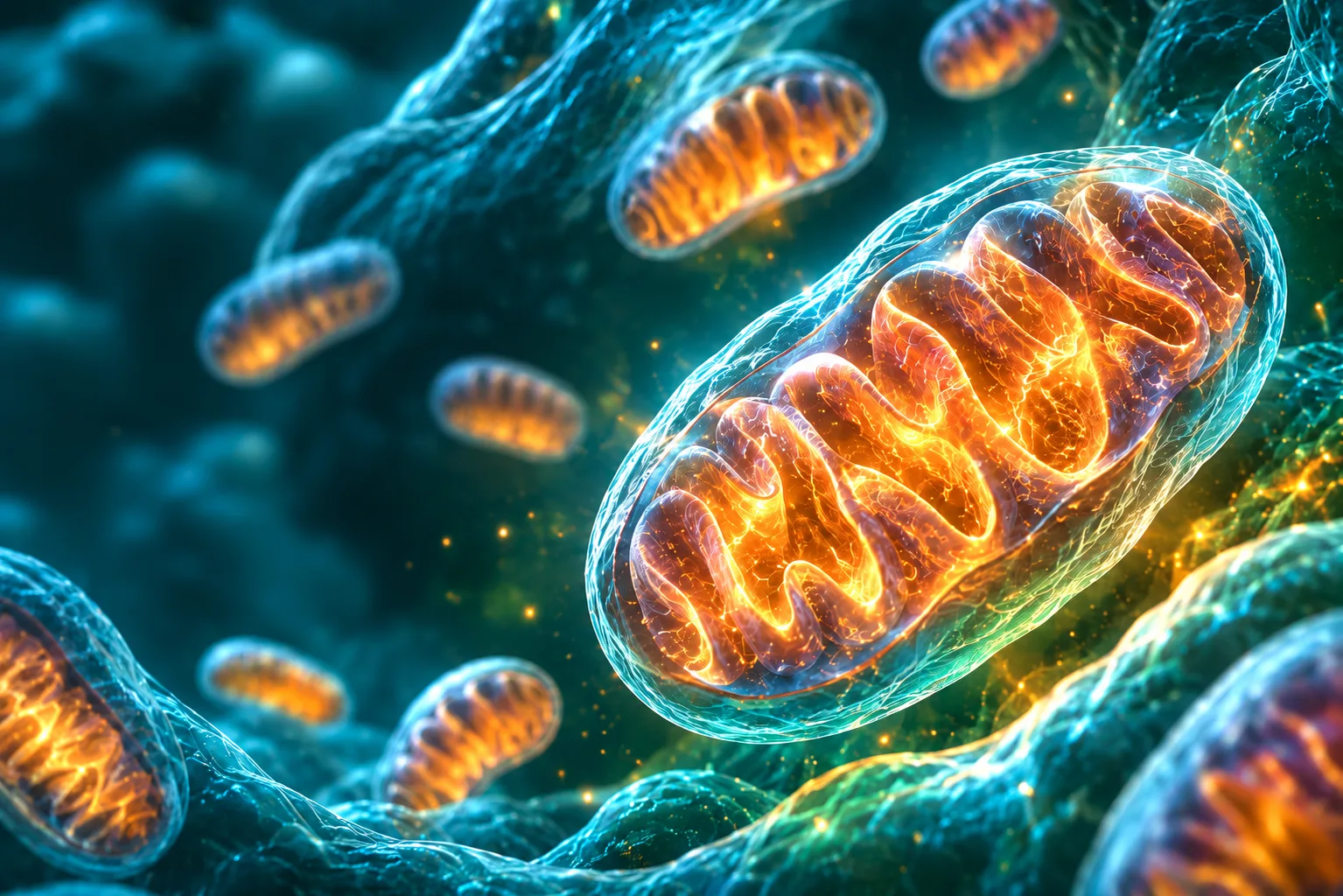
Imagine your body is an enormous city.
Your brain is the command center. Your heart is the transportation system. Your muscles keep everything moving.
Now imagine every building in that city needs electricity to function.
That’s where mitochondria come in.
Mitochondria are tiny structures, called organelles, found inside nearly every cell in your body.
Their primary job is to transform energy from the nutrients you eat into a form your cells can actually use.
That energy is stored in a molecule called ATP: adenosine triphosphate.
Think of ATP as your body’s rechargeable energy currency.
Every time your muscles contract, your heart beats, or your neurons transmit signals, your cells need energy.
And mitochondria produce most of the ATP that makes those processes possible.
Here’s what I find incredible.
Different cells have different energy requirements.
Your heart works continuously, so heart muscle cells are packed with mitochondria.
Your brain requires enormous amounts of energy to process information and coordinate your body.
Your skeletal muscles need energy to move, exercise, lift weights, and recover.
Your body doesn’t simply need energy to exercise. It needs energy to exist.
And mitochondria are central to that process.
2. How Do Mitochondria Actually Create Energy?
Let’s make this simple.
You eat food.
Your digestive system breaks that food down into nutrients your body can absorb and use.
Carbohydrates can provide glucose. Fats provide fatty acids. Proteins provide amino acids.
Your cells process these nutrients through several metabolic pathways.
Inside the mitochondria, much of this energy is transferred through a remarkable process called oxidative phosphorylation.
Mitochondria use an electron transport chain to create an electrical and chemical gradient across their inner membrane.
That gradient powers a molecular machine called ATP synthase.
ATP synthase produces ATP from ADP and phosphate.
Think of it as recharging a battery over and over again.
Your body continuously uses ATP and regenerates it.
And this is happening every second of your life.
Now here’s an important distinction.
Eating more food doesn’t automatically mean producing more usable energy.
Your cells must be able to process nutrients, maintain healthy metabolic pathways, and meet their energy demands.
That’s one reason cellular health deserves so much attention.
3. Your Mitochondria Can Multiply
This is one of my favorite discoveries.
Your mitochondria are not a fixed collection of batteries that you’re born with and slowly use up.
They’re dynamic.
They can grow, divide, fuse together, and change their structure.
Your cells can increase their mitochondrial capacity through a process called mitochondrial biogenesis.
Think about that.
Your body has mechanisms for adapting its energy-producing machinery to changing demands.
Exercise is one of the best-studied ways to stimulate these adaptations, especially in skeletal muscle.
And your body has another fascinating process called mitophagy.
Mitophagy helps identify and remove damaged or unnecessary mitochondria so their components can be recycled.
In other words, your cells don’t simply produce energy.
They also have systems for maintaining the machinery that produces it.
Mitochondrial biogenesis, mitochondrial division, fusion, and mitophagy work together to help maintain cellular function.
That’s extraordinary.
4. Why Mitochondria Matter for More Than Energy
We often describe mitochondria as batteries.
That’s a useful analogy, although their responsibilities extend far beyond producing ATP.
Mitochondria participate in:
- Cellular signaling and communication.
- Calcium regulation, which is important for muscle contraction and other functions.
- Metabolism and nutrient processing.
- The production of certain signaling molecules.
- Immune responses and inflammation.
- Programmed cell death, a process called apoptosis.
- Responses to cellular stress.
So when we talk about mitochondrial health, we’re not simply talking about whether you have enough energy to get through a workout.
We’re talking about structures involved in maintaining the health and function of your cells.
5. The COVID Connection: What Happened to Our Energy?
Think back to life before COVID.
Now think about how many conversations you’ve heard since then about exhaustion, brain fog, reduced stamina, and people simply not feeling like themselves.
For some people, these symptoms appeared after a COVID-19 infection and persisted long after the initial illness.
Researchers have been investigating several possible mechanisms behind these symptoms, including changes in immune activity, inflammation, circulation, autonomic nervous system function, and cellular metabolism.
Mitochondrial dysfunction is one of the areas being studied.
SARS-CoV-2, the virus responsible for COVID-19, can interfere with cellular processes involved in metabolism and immune responses.
Researchers are exploring how these changes might contribute to persistent symptoms in some people.
Does that mean every person who has had COVID has damaged mitochondria?
Not necessarily.
And does it mean every case of fatigue since 2020 comes from mitochondria?
No. Fatigue has many possible causes.
What it does mean is that cellular energy production is an important part of the conversation.
Maybe we need to start asking what is happening inside our cells, rather than only asking how to push through another exhausting day.
6. Epstein-Barr Virus, Lyme Disease, and Mitochondrial Stress
COVID isn’t the only infection that has raised questions about mitochondrial function.
Let’s look at two others.
Epstein-Barr virus (EBV)
Epstein-Barr virus is extremely common and is best known for causing infectious mononucleosis.
EBV can remain latent in the body after infection.
Research has demonstrated that EBV can alter the metabolism of infected cells, including mitochondrial pathways.
This is particularly interesting when we consider how viruses interact with the immune system and use cellular machinery.
However, carrying EBV does not automatically mean someone has impaired mitochondrial function.
Lyme disease
Lyme disease is caused by bacteria from the Borrelia burgdorferi group and is transmitted through infected tick bites.
Lyme disease can cause fatigue, pain, and neurological symptoms.
Researchers continue to investigate how infection-related inflammation, immune responses, and cellular changes contribute to symptoms, including those that persist after treatment.
The mitochondrial connection remains an area requiring more research.
What connects these infections?
They remind us that our cells don’t operate in isolation.
Infections can trigger immune responses, inflammation, and changes in metabolism.
And those changes can affect how the body feels and functions.
This is why I believe it’s important to look at the whole biological picture.
7. The Everyday Things Influencing Your Mitochondria
Now let’s talk about something we have more control over.
Our everyday environment.
Every day, our bodies respond to what we eat, how we sleep, how we move, what we inhale, and the substances we’re exposed to.
Some exposures support normal cellular function.
Others can create additional stress.
And some have complicated effects that depend on the amount, duration, and individual.
Caffeine: Are We Creating Energy or Borrowing Alertness?
Let’s talk about coffee.
I know. This one might hurt a little!
How many of us wake up and immediately reach for caffeine?
Not necessarily for enjoyment.
For survival.
We need it to wake up, focus, get moving, and function.
Have you ever wondered what caffeine is actually doing inside your body?
Caffeine doesn’t create cellular energy. It primarily works by blocking adenosine receptors in your brain, temporarily reducing the sensation of tiredness.
It also influences neurotransmitter systems involved in alertness, motivation, and your body’s stress response, including dopamine and norepinephrine.
In other words, caffeine can make you feel more awake without addressing why you’re exhausted in the first place.
And here’s where things get interesting.
Your body is constantly communicating through an intricate network of biological signals. These signals help regulate everything from your energy and mood to your sleep and recovery.
Caffeine is an external stimulant that can add noise to these natural communication systems.
When we repeatedly rely on artificial stimulation to get through the day, we may overlook the underlying reasons our bodies are struggling to maintain energy naturally.
Think about the cycle.
You wake up exhausted, so you drink coffee.
Your energy dips in the afternoon, so you reach for another cup.
By evening, you’re tired, yet sometimes too wired to get the restorative sleep your body needs.
And the next morning?
The cycle begins again.
Over time, caffeine dependence and disrupted sleep can make it increasingly difficult to distinguish genuine energy from temporary stimulation.
What matters is understanding the difference between stimulating your nervous system and supporting the biological processes that help your body produce and regulate energy naturally.
So here’s my question.
Are we drinking coffee for the pleasure of it, or are we relying on caffeine to compensate for a body that’s asking for something else?
That’s worth thinking about.
Nicotine and Smoking
Smoking exposes the body to a mixture of chemicals that can increase oxidative stress and interfere with normal cellular function.
Research has linked tobacco smoke exposure with mitochondrial damage and altered mitochondrial activity in various tissues.
Nicotine itself also affects cellular signaling and metabolism.
The effects depend on the type and amount of exposure, so nicotine and tobacco smoke should not be treated as identical.
Still, avoiding smoking is one of the clearest ways to protect long-term health.
Alcohol
Alcohol metabolism can generate compounds that place stress on cells, particularly in the liver.
Heavy or prolonged alcohol consumption can interfere with mitochondrial metabolism, increase oxidative stress, and contribute to tissue damage.
Your mitochondria are involved in processing the metabolic consequences of alcohol exposure.
And this is another reason to think about what repeated habits may be doing beneath the surface.
Cannabis
Cannabis compounds interact with the body’s endocannabinoid signaling system.
Some laboratory studies suggest cannabinoids can influence mitochondrial activity, calcium signaling, and cellular metabolism.
However, these effects vary by compound, dose, tissue, and experimental conditions.
We cannot assume that all cannabis use produces the same mitochondrial outcome.
It’s an area worth understanding rather than reducing to a simple good-or-bad label.
Poor Nutrition
Food isn’t simply calories.
It’s the raw material your cells use to function.
Your body requires adequate protein, essential fats, vitamins, minerals, and other nutrients to maintain normal metabolism.
Several nutrients are particularly important to energy-producing pathways, including B vitamins, iron, magnesium, and copper.
Nutritional deficiencies can interfere with energy metabolism.
And the quality of your overall diet can influence inflammation, blood sugar regulation, and metabolic health.
I think we need to stop looking at food exclusively through the lens of weight loss.
What if we started asking how our food is supporting the billions of cells that keep us alive?
Lack of Exercise
Your body is incredibly adaptable.
When you consistently challenge your muscles, they respond.
Regular physical activity can improve mitochondrial function and stimulate the development of additional mitochondrial capacity.
When we become inactive, we lose some of those adaptations.
This doesn’t mean everyone needs intense workouts.
Walking, resistance training, cycling, swimming, and appropriately prescribed endurance exercise can all play important roles in supporting health.
The key is consistency and matching activity to your body’s capacity.
For people with post-exertional malaise, including some people with Long COVID, pushing through exercise can worsen symptoms. Activity needs to be individualized.
Environmental Toxins
Our cells encounter environmental exposures throughout life.
Some pollutants, heavy metals, pesticides, and industrial chemicals can interfere with mitochondrial pathways under certain exposure conditions.
Mitochondria can be particularly vulnerable to substances that disrupt their membranes, enzymes, or electron transport chain.
The dose, duration, and type of exposure matter.
We cannot eliminate every environmental exposure, although reducing avoidable risks is a reasonable goal.
8. Oxidative Stress: When Cellular Balance Is Disrupted
Here’s another important concept.
As mitochondria produce energy, they also generate molecules called reactive oxygen species, or ROS.
You may have heard these described as free radicals.
Now, not all reactive oxygen species are bad.
In normal amounts, they participate in important signaling processes.
Your cells also have antioxidant systems that help regulate them.
Problems can develop when the production of reactive molecules exceeds the body’s ability to manage them.
This is called oxidative stress.
Excessive oxidative stress can damage proteins, lipids, and DNA, including mitochondrial components.
And damaged mitochondria may, in turn, contribute to further oxidative stress.
It’s a complicated relationship, not simply a matter of eliminating every free radical.
Your body needs balance.
9. Mitochondria, Aging, and Menopause
At 46, this subject is especially personal to me.
I want to remain strong, energetic, mentally sharp, and physically capable for decades to come.
I want to navigate menopause with as much ease as possible.
And I have absolutely no intention of accepting that feeling worse every year is simply my destiny.
Mitochondria are deeply connected to the biology of aging.
As we age, mitochondrial function, cellular repair processes, and metabolic regulation can change.
Hormonal changes can also influence metabolism, sleep, body composition, and how we feel.
Estrogen interacts with several metabolic pathways, including pathways associated with mitochondrial function.
That makes the relationship between menopause, cellular energy, and metabolic health particularly interesting.
Still, menopause-related fatigue isn’t automatically mitochondrial dysfunction.
Sleep changes, iron deficiency, thyroid conditions, medications, and many other factors can contribute.
For me, the goal is to understand as many pieces of the puzzle as possible.
Not to accept every symptom as inevitable.
And not to chase a miracle solution.
I want to understand my body well enough to make better decisions.
If you’re curious about the approach I’m exploring, you can learn more here:
Explore BiomeTech and the Foundation Kit
My Final Thoughts: Stop Accepting Exhaustion as Your Normal
I started Flavilicious Fitness with a passion for helping women feel strong, confident, and healthy.
Over the years, that passion has grown into something much bigger.
I want to understand what makes our bodies function.
What interferes with that function.
And how we can make informed choices to support our health as we age.
At 46, I’m not slowing down.
I want energy to work out, enjoy my children, travel, build businesses, and live fully.
I want to stay mentally sharp.
I want to maintain my strength and body composition.
And I want to understand what’s happening inside my body rather than simply chasing the next wellness trend.
The mitochondria are one extraordinary part of that story.
And we’re only getting started.
In my next article, we’re diving deeper into DNA, RNA, and the biological instructions that help regulate nearly everything happening inside us.
From there, we’ll explore the microbiome and the fascinating ways microorganisms interact with human biology.
I hope you’ll join me.
We spend so much time trying to find more energy. Maybe it’s time we started understanding how our bodies actually produce it.
With love,
Flavia ❤️
Flavilicious Fitness
Where Strong Meets Sexy
Educational disclaimer: This article is for general education and reflects my interest in cellular biology and wellness. It is not medical advice. The research discussed includes established findings and emerging hypotheses. BiomeTech products are not presented as treatments for mitochondrial disease, Long COVID, Lyme disease, or other medical conditions.
Disclosure: I work with and promote BiomeTech and may receive compensation from qualifying purchases made through my links.