
The fascinating relationship between our genetic instructions, cellular communication, and the microbiome.
In my last article, we explored the tiny batteries inside our cells: mitochondria.
These incredible little structures take the energy from the food we eat and help convert it into ATP, the energy currency our cells use to function.
Without ATP, our muscles couldn’t contract, our nerves couldn’t communicate properly, and our hearts couldn’t continue beating.
Here’s something that fascinated me even more.
How do our cells know what to do with that energy?
How do they know when to produce certain proteins, repair damaged tissue, respond to an infection, or adapt to changes in their environment?
What actually directs all this activity?
Well, this is where DNA, RNA, and the microbiome come into the picture.
And trust me, this is fascinating!
1. DNA: The Queen of the Cell
We’ve all heard of DNA.
Most of us associate it with genetics. Our eye color, hair color, height, and the traits we inherit from our parents.
And yes, DNA helps determine those things.
That’s only the beginning.
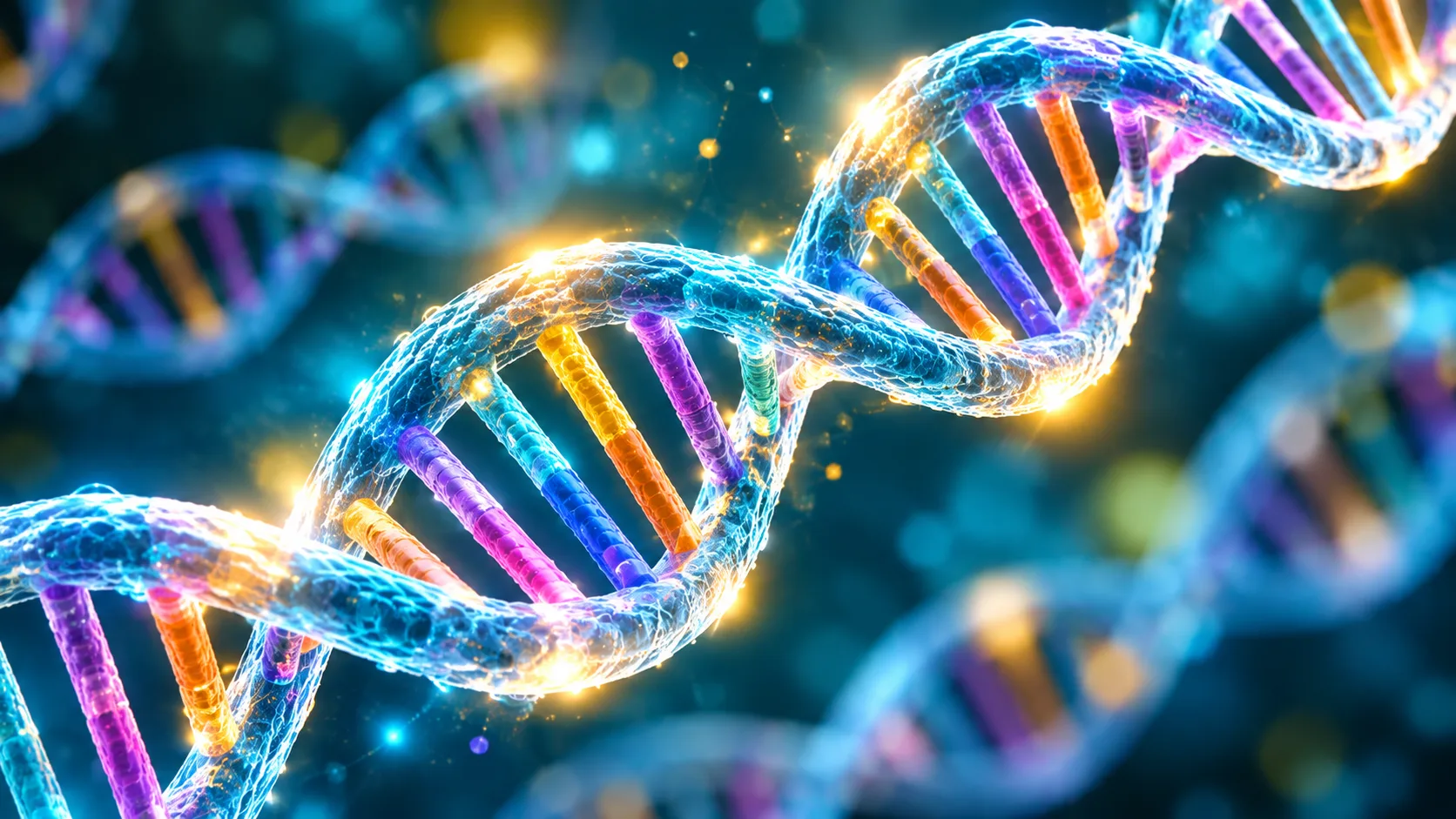
DNA contains the genetic instructions our cells use throughout our entire lives.
It doesn’t simply determine how we’re built and then retire once we’re born.
Our cells continue using and regulating genetic information every second of every day.
Think of DNA as the queen sitting inside her castle.
She holds an enormous library of instructions, containing information needed to build proteins and maintain the body’s countless biological processes.
The queen doesn’t personally carry out every task.
She has workers.
And those workers are part of an extraordinary system involving RNA.
Before we get to RNA, here’s something remarkable.
Nearly every nucleated cell in your body contains essentially the same DNA.
Yet your heart cells, skin cells, muscle cells, and brain cells all perform completely different functions.
How?
Different cells use different parts of their genetic instructions.
A muscle cell needs to produce proteins that help it contract.
A nerve cell needs proteins involved in sending and receiving signals.
A liver cell needs proteins that support metabolism and other specialized functions.
The instructions are there, but each cell regulates which instructions it uses.
It’s an incredibly sophisticated system.
And it brings us to the next part of the story.
2. RNA: The Queen’s Workers
If DNA is the queen, think of RNA as part of the workforce that helps carry out her instructions.
There isn’t just one type of RNA.
There are many, and they have different responsibilities.
Some carry genetic messages.
Others help assemble proteins.
And some help regulate which genes are active.
Let’s simplify this.
Imagine DNA sitting safely inside the nucleus, where most of our genetic information is stored.
When a cell needs to produce a particular protein, specialized enzymes make an RNA copy of the relevant DNA instructions.
That process is called transcription.
One type of RNA, messenger RNA, or mRNA, carries that copied information to a structure called a ribosome.
The ribosome then uses the instructions to assemble a protein.
This process is called translation.
Other RNA molecules help make that possible.
Transfer RNA delivers amino acids, the building blocks of proteins.
Ribosomal RNA forms an essential part of the machinery that assembles them.
And other types of RNA help regulate cellular activity.
So while I love the analogy of RNA being the queen’s workers, it’s important to understand that RNA doesn’t simply run back and forth reading DNA on its own.
It’s part of a much larger network of enzymes, proteins, and regulatory molecules.
And together, they help our cells turn genetic information into biological activity.
Think about that.
Your body is constantly using genetic instructions to produce the molecules it needs to function.
And it doesn’t stop after childhood.
It continues throughout your entire life.
3. Your DNA Is Constantly Being Used
This is something I wish more people understood.
We often think of DNA as a fixed blueprint.
Something we’re born with that determines our future.
And while our DNA sequence remains relatively stable in most cells, the way our bodies use that information is dynamic.
Your cells continually regulate which genes are active.
This is called gene expression.
And gene expression can change in response to many different factors.
Hormones.
Nutrients.
Physical activity.
Immune signals.
Cellular stress.
And changes in the environment surrounding our cells.
For example, when you exercise, your muscle cells receive signals indicating that their energy demands have increased.
Those signals activate biological pathways that can influence gene expression.
Over time, these responses can contribute to adaptations in muscle function and mitochondrial capacity.
Your body is responding to the demands being placed on it.
Isn’t that remarkable?
Now, this doesn’t mean we can consciously switch any gene on or off whenever we choose.
Gene regulation is much more complicated than that.
It does mean our biology is constantly responding to information.
And that brings us to something called DNA methylation.
4. DNA Methylation: When Genetic Instructions Become More or Less Accessible
Have you ever heard of methyl groups?
This was one of the subjects that really caught my attention.
A methyl group is a small chemical structure containing one carbon atom and three hydrogen atoms.
Our bodies use methyl groups in many normal biological processes.
One of those processes is called DNA methylation.
DNA methylation occurs when specialized enzymes add methyl groups to certain locations on DNA.
Depending on where this happens, methylation can influence how actively a gene is expressed.
Let’s go back to our queen analogy.
Imagine DNA as an enormous library of instructions.
Some books are readily accessible.
Others are kept in sections that are more difficult to access.
DNA methylation is one of the mechanisms cells use to help regulate access to genetic information.
In some circumstances, methylation near a gene’s regulatory region can reduce its activity.
Methylation doesn’t always silence genes.
Its effects depend on where it occurs and the surrounding biological conditions.
And here’s something important.
Methylation is not inherently harmful.
We actually need it.
Normal DNA methylation is essential for development, cell specialization, and healthy gene regulation.
Problems can arise when these processes become disrupted.
Abnormal methylation patterns have been associated with several diseases, including certain cancers.
The goal isn’t to remove every methyl group from our DNA.
The goal is normal, appropriately regulated biological activity.
Where Do Methyl Groups Come From?
Our bodies obtain and transfer methyl groups through normal metabolic pathways.
This involves a process known as one-carbon metabolism.
Nutrients such as folate, vitamin B12, choline, and methionine help support these pathways.
The body uses a molecule called S-adenosylmethionine, or SAM, as an important methyl-group donor.
Specialized enzymes transfer methyl groups to DNA and other molecules when needed.
Our cells also have mechanisms that can modify or remove DNA methylation marks.
So methylation is not simply a collection of unwanted chemicals accumulating on our DNA.
It’s part of a complex regulatory system.
And it leads us to another fascinating subject.
How do our cells know when to change their activity?
Part of the answer lies in biological communication.
5. Your Cells Are Constantly Receiving Messages
Here’s where the story gets really interesting.
Our cells don’t operate independently.
They’re constantly communicating with one another and responding to their surroundings.
Think of your body as an enormous communication network.
Messages are being sent.
Signals are being received.
Instructions are being interpreted.
And biological responses are taking place.
Some signals come from hormones.
Others come from neurotransmitters, immune molecules, nutrients, and compounds produced during metabolism.
Cells have specialized receptors and molecular systems that help them recognize and respond to these signals.
Depending on the signal, a cell may alter its metabolism, produce certain proteins, activate immune responses, or change aspects of gene expression.
Sometimes a signal increases the activity of a particular pathway.
Other times it decreases it.
And different cells can respond differently to the same signal.
This is one of the reasons biology is so fascinating.
The same genetic information can be used differently depending on the type of cell and the signals it receives.
Now here’s the part that really captured my attention.
Not every chemical signal influencing our cells comes from our own tissues.
Some are produced by the microorganisms living in and on our bodies.
Welcome to the microbiome.
6. The Microbiome: A World of Biological Communication
If you’ve been following my journey, you already know how fascinated I’ve become with the microbiome.
And I think this is one of the most interesting areas of modern biological research.
Our bodies are home to trillions of microorganisms.
Bacteria.
Fungi.
Viruses.
And other microbes.
These microorganisms live in communities throughout the body.
We have microbiomes associated with our gut, skin, mouth, nose, reproductive tract, and other specialized environments.
Each community has its own characteristics.
And each interacts with the tissues around it.
Now, I want you to think about something.
These microorganisms don’t just live alongside us. Their activities can influence our biology.
They consume nutrients.
They interact with their environment.
And they produce chemical compounds.
Some of these compounds can interact with our cells.
This is where the science of the microbiome becomes particularly interesting.
Certain microbial compounds can influence cellular signaling, immune responses, metabolism, and aspects of gene regulation.
Let’s look at an example.
7. How Microorganisms Can Influence Gene Regulation
Certain bacteria in our intestines ferment dietary fibers.
During this process, they produce compounds called short-chain fatty acids.
One of these is butyrate.
Butyrate is particularly interesting.
It can serve as an energy source for cells lining the colon.
It can also interact with cellular signaling pathways.
And researchers have found that butyrate can influence certain enzymes involved in regulating gene expression.
One group of these enzymes is called histone deacetylases, or HDACs.
Histones are proteins that help package DNA inside our cells.
Chemical changes involving histones can influence how accessible different regions of DNA are to the machinery involved in gene expression.
In some experimental settings, butyrate can inhibit HDAC activity.
That means a compound produced by microorganisms can influence a mechanism involved in how our cells regulate genetic information.
Think about that for a moment.
A microorganism can produce a chemical compound that interacts with the systems our cells use to regulate gene activity.
That’s fascinating!
Now, does this mean the microbiome controls all our DNA and RNA?
No.
Gene expression is regulated by an enormous network of processes, and the microbiome is one of many influences.
The fact that microbial activity can interact with these systems is remarkable.
And it helps explain why researchers are so interested in the relationship between our microbiome and our overall health.
8. Is the Microbiome the Boss of Our Biology?
I once heard the microbiome described as the master director of communication between DNA and RNA.
I love that analogy.
It certainly makes you stop and think.
Scientifically, the relationship is more complicated.
Our microbiome doesn’t possess all the instructions contained in our DNA.
And it doesn’t directly command RNA to carry out every cellular function.
Instead, microorganisms participate in a complex network of biological interactions.
They can produce metabolites that influence cellular pathways.
Our cells respond to those compounds through specialized molecular systems.
And those responses can sometimes influence gene expression.
At the same time, our own biology influences which microorganisms thrive in different parts of the body.
It’s a two-way relationship.
Our immune system, metabolism, diet, and tissue environment help shape microbial communities.
And microbial activity can influence the environment surrounding our cells.
We’re not dealing with one master controller. We’re dealing with an interconnected biological ecosystem.
Personally, I find that even more fascinating.
9. Your Body Is Like a Bacteria Hotel
Here’s an analogy I love.
Think of your body as a hotel.
The microorganisms living in and on your body are the guests.
Some guests contribute to a healthy, functioning environment.
Others can create problems under certain conditions.
The conditions inside the hotel influence which guests are able to thrive.
The food available.
The surrounding environment.
Competition with other microorganisms.
The body’s immune responses.
And many other factors.
Now, this doesn’t mean every bacterium is simply good or bad.
Some microorganisms are beneficial in one location and potentially harmful in another.
Healthy microbial communities depend on much more than simply having the largest possible number of bacteria.
Balance, function, location, and context all matter.
The hotel analogy helps illustrate an important point.
The environment we create can influence the microbial communities living within us.
Our diet, medications, illnesses, and other exposures can all affect the microbiome.
And in turn, microbial activity can influence the chemical environment surrounding our cells.
It’s another reminder that our bodies are connected systems.
Not isolated organs.
Not isolated symptoms.
A living network of cells, microorganisms, nutrients, and signals.
10. What Does This Have to Do With Mitochondria?
Now let’s connect everything back to my previous article.
Remember that mitochondria produce much of the ATP our cells use for energy.
The mitochondria don’t operate in isolation either.
Their function is influenced by cellular signaling, nutrient availability, genetic regulation, and many other factors.
Researchers are now studying how microbial metabolites may interact with mitochondrial pathways.
This emerging field is sometimes called the microbiome–mitochondria axis.
Some experimental studies suggest that certain microbial compounds can influence mitochondrial activity, oxidative stress, and metabolic signaling.
Other microbial products may contribute to inflammation or interfere with normal cellular function under particular conditions.
The relationship is complex.
And much of the research is still developing.
The broader concept is fascinating.
Our cellular energy systems, genetic instructions, and microbial communities are connected through multiple biological pathways.
Mitochondria help provide energy. DNA stores genetic information. RNA helps cells use that information. And chemical signals, including some produced by microorganisms, can influence how cells respond.
These aren’t separate stories.
They’re different parts of the same biological system.
11. So What Can We Actually Do?
This is the question I always come back to.
Understanding the science is fascinating, but what does it mean for everyday life?
We can’t control every aspect of our biology.
And there isn’t one universal product, supplement, or lifestyle change that can correct every health problem.
We can support the conditions in which our cells and microbial communities function.
Regular physical activity helps stimulate beneficial adaptations in our muscles and mitochondria.
Restorative sleep supports normal metabolic and physiological regulation.
A varied, nutrient-dense diet provides essential building blocks for cellular function.
Fiber-rich foods, where tolerated, can support beneficial microbial fermentation.
Avoiding smoking and limiting alcohol can reduce exposures associated with numerous health risks.
And persistent symptoms such as unexplained fatigue deserve proper medical evaluation rather than being automatically blamed on mitochondrial dysfunction or the microbiome.
I think the most important takeaway is this:
Our bodies are constantly responding to the environments we create and the signals they receive.
Not every influence is within our control.
Understanding how these systems interact gives us more opportunities to make informed choices about our health.
12. Why This Science Led Me to BiomeTech
Over the past four years, I’ve spent a tremendous amount of time researching the microbiome, fermentation, cellular health, and the fascinating ways microorganisms interact with our bodies.
And the more I learn, the more curious I become.
What interests me most is the idea of biological communication.
Not simply what nutrients we’re consuming, but the chemical compounds produced through microbial activity and how those compounds interact with our cells.
This curiosity is one of the reasons I became involved with BiomeTech.
I’ve personally used BiomeTech products for years, and I recently decided to partner with the company.
What drew me to them was their approach to fermentation and their focus on compounds produced through microbial processes.
BiomeTech describes aspects of its proprietary technology using the term Pluripotent Probiotic Proteins™.
The company has developed a fermentation-based approach that I find incredibly interesting.
What fascinates me is the broader scientific idea that microbial compounds can participate in biological communication.
Research into microbial metabolites, cellular signaling, and gene regulation continues to develop.
Of course, evidence that a particular microbial compound influences a pathway in a laboratory doesn’t automatically establish that a finished commercial product produces the same effect in humans.
Those specific effects need to be demonstrated through appropriate product research.
The underlying field of biology is fascinating.
And it’s something I plan to keep exploring and sharing with you.
13. The Bigger Picture: The Language of Your Biology
When I first started learning about health and fitness, I was focused on nutrition, exercise, and helping people look and feel their best.
And I still am.
The deeper I’ve gone into cellular biology, the more I’ve realized how much is happening beneath the surface.
Your body is constantly producing energy.
Reading genetic instructions.
Building proteins.
Sending and receiving signals.
Responding to its environment.
And interacting with trillions of microorganisms.
All of this is happening every second of your life.
And here’s what I find most remarkable.
Your body isn’t a machine following one fixed set of instructions. It’s a living, responsive system, constantly adapting to changing conditions.
The more we understand these processes, the better equipped we are to appreciate what our bodies need and how our choices may influence our health.
And I think we’re only beginning to appreciate just how intricate this biological communication really is.
Coming Next: Fermentation, Postbiotics & the Chemical Language of Microorganisms
Now that we’ve explored DNA, RNA, and how microorganisms can influence cellular signaling, I want to take you one step further.
What actually happens during fermentation?
What are postbiotics?
And why are scientists so interested in the compounds microorganisms produce?
That’s where we’re going next.
And trust me, it gets even more fascinating!
Until then, stay curious, ask questions, and never stop learning about the incredible body you live in.
With love,
Flavia ❤️
Flavilicious Fitness

Educational note: This article is intended for general education and is not medical advice. Research into microbial metabolites, epigenetics, and cellular signaling is ongoing. Findings about these biological processes do not establish that a particular commercial product produces the same effects in humans.